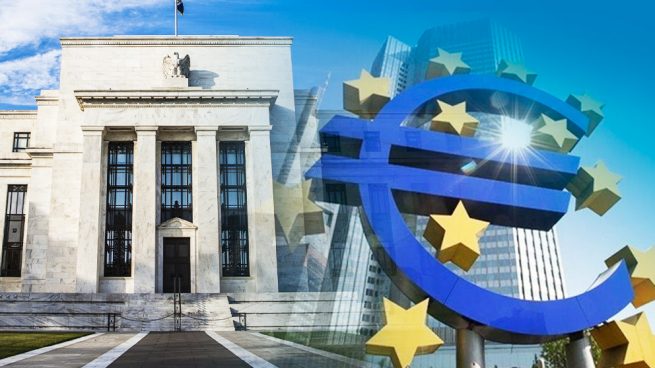
Falling Markets, Rising Inflation & Invisible Wealth
Egon von Greyerz and Matthew Piepenburg, swap thoughts on the bearish decline of U.S. risk assets along side an equally painful rise in inflationary forces.
Read article
Egon von Greyerz and Matthew Piepenburg, swap thoughts on the bearish decline of U.S. risk assets along side an equally painful rise in inflationary forces.
Read article
Investors who exited the stock markets early enough will have to re-invest their cash somewhere. However, the stocks are falling and so are the bonds. The safety is certainly to place them in the precious metals, whose charts and fundamentals are extremely reassuring.
Read article
The intensity of the bond market's decline is unprecedented. Bloomberg's Aggregate Index, which measures a basket of more than 28,000 bonds, has lost more than 15% since the beginning of the year, a drop not seen since the 1970s.
Read article
Inflation is here to stay. But the question now is: can it degenerate into hyperinflation?
Read article
The recession forecasts is leading many speculators to bet on the coming fall in commodity prices. this strategy of short selling on commodities is coming up against a problem of physical supply. In metals, reserves on the London Metal Exchange have never been so low, and the latest correction ha...
Read article
Gold is logically regaining its stable monetary value in an increasingly tense geopolitical context, at a time when the energy future of the European continent poses many questions and when the risks of stagflation have never been so great since the Second World War.
Read article
Gold remains a strong competitor. The yellow metal is particularly popular with countries that want to de-dollarize. Central banks that bypass the dollar system of financing are the ones that have bought the most gold over the last twenty years. The acceleration of de-dollarization will therefore...
Read article
Gold is as cheap today relative to US money supply as in 1971 when the price was $35 and in 2000 when gold was $290.
Read article
Monetary policies are often analyzed in terms of their impacts or correlations with macroeconomic indicators, such as GDP, unemployment or the balance of payments. They are more rarely analyzed according to the consequences they generate at the individual level.
Read article
Christine Lagarde's denial, its refusal to raise the key rate, and its apathy towards inflation, will prolong the weakening of the euro against the dollar, thus creating an additional cause of inflation (raw materials being paid in dollars, the fall of the euro mechanically increases their price)...
Read article