You may recall the period following the 2008 systemic crash and the attempts to implement the Dodd-Frank rules to regulate banks. At the CFTC (Commodity Futures Trading Commission), the regulator of commodity futures markets, a team of "incorruptibles" was assembled. The task was particularly difficult: a CFTC official earned on average barely more than $3,000, and at best $4,000, while facing extremely powerful banks that regularly manipulated the precious metals market. These banks amassed millions of dollars and didn't hesitate to try to influence those who sought to obstruct them.
At the time, Bart Chilton, one of the five commissioners of the CFTC, made commendable efforts to expose price manipulation by these dominant banks acting in concert. He unfortunately passed away following an illness. Under his authority, twenty prosecutors were tasked with enforcing the law. As of today, none remain; the last one resigned on Monday, February 23.
COMEX is often nicknamed “CRIMEX” on social media. Today, in this market, it looks possible to break rules and laws with very little real risk of prosecution, due to the lack of authority to bring offenders to justice.
On November 30, the CME shut down all of its computer systems for ten hours to negotiate with a buyer to withdraw their delivery order for 7,330 contracts of 5,000 ounces of silver — a total of 36 million ounces — which would have placed COMEX in a very precarious situation. Ultimately, this trader agreed to have 6,816 of his contracts settled in cash, for a premium of $65 million.
In December, COMEX officials reportedly negotiated similarly for 95% of the contracts involved, settling them in cash, and prohibited the release of the remaining silver bars from storage for an undisclosed period.
On Thursday, February 26, a few hours before the contracts were due to expire, the CME again shut down its servers and canceled all the precious metals contracts entered into that day.
Is the COMEX bankrupt?
Remember that on Thursday, November 27, without any press release, JP Morgan relocated its entire precious metals trading desk— which handles billions of dollars daily — from New York to Singapore. Fifty traders and their families were ordered to relocate to Singapore, in the Asia-Pacific region, by that date.
In mid-January, four major banks completely withdrew from the silver market on the COMEX:
- JPM
- HSBC
- SCOTIA
- BNP PARIBAS
These institutions accounted for more than 40% of trading in precious metals futures contracts. They did not want to find themselves at the heart of a market in turmoil, nor be associated with a potential bankruptcy and the legal and financial risks that could result.

India no longer follows the London fixing
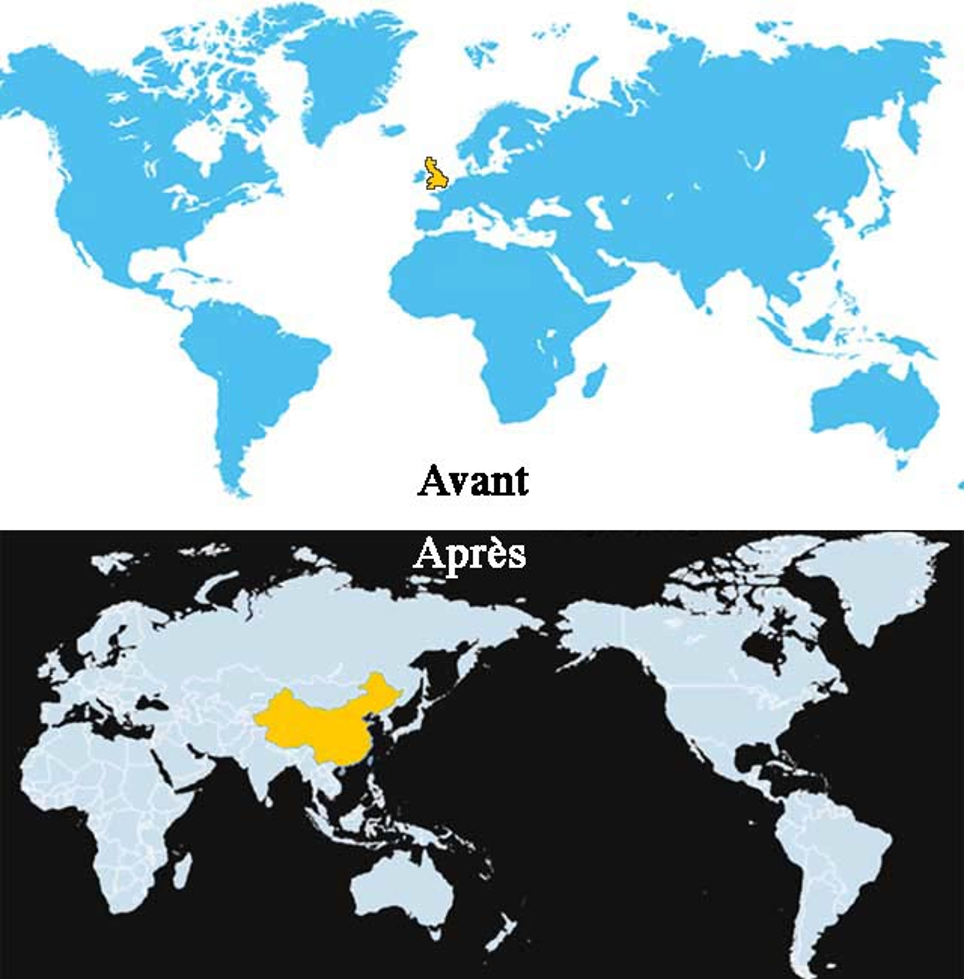
Take a look at an atlas: you'll see that, on most maps, the center of the world is located in Europe, or even England. These representations reflect a vision centered on the dominant Western nations. This paradigm now appears largely outdated.
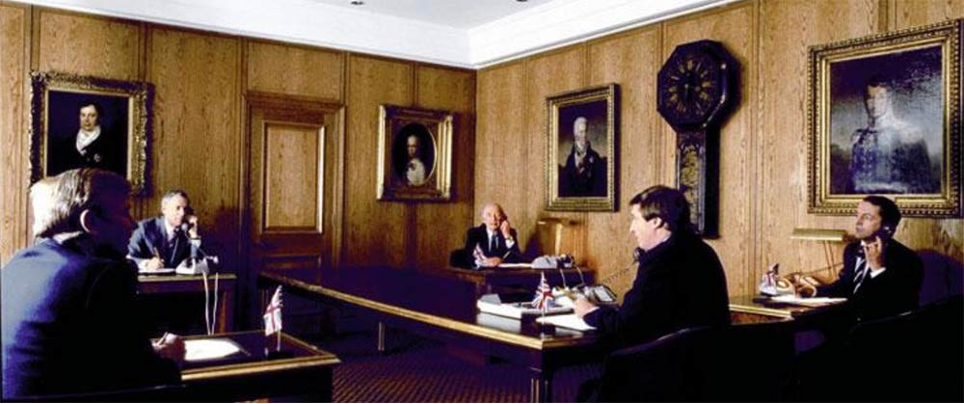
Since 1919, the global benchmark for the price of gold was the London fixing, resulting from an exchange between the five major bullion banks in London, originally conducted in the offices of N.M. Rothschild.
Today, given the situation at the COMEX in New York and the difficulties experienced by the London market in October, a growing part of the world is turning to the Shanghai fixing.
For the past few weeks, India has officially announced that the benchmark for its gold and silver market will no longer be the price set in London. This is major news.
India's decision is a clear illustration of this: the world's center of gravity is no longer in Europe, but in Asia.
The gold and silver stock figures published by the London market are, in my opinion, more a product of the metaverse than reality. These stocks are supposedly not available for sale and could, in fact, belong quite entirely to Chinese banks — Read my article on this subject.
One day sooner or later, this scandal will erupt, triggering a major monetary shock, which would send our currencies plummeting against precious metals.
The rigor of the Shanghai Gold Exchange
In contrast to the opacity of the precious metals market in London and New York, the SGE is at the exact opposite end of the spectrum.
Gold and silver sold during the day change hands at the close.
Physical stock figures are published daily for both the SGE and the SHFE (Shanghai Futures Exchange).
A Chinese billionaire, Bian Ximing, has become a major player in the commodities market after making significant investments in metals markets in recent years. After heavily betting on the silver rally since last August, he began reducing his positions in November, believing that the peak of this upward trend was approaching.
According to Bloomberg, this trader already held the largest net short position in silver ever recorded on the stock exchange at the beginning of 2026. He was one of the main beneficiaries of the downward movement on January 29 and 30.
However, Chinese authorities have identified significant manipulation of the silver price, notably through a leveraged tracker, as well as through the coordinated action of several hedge funds taking positions exceeding the available stocks in Shanghai.
The sanctions were swift: 25 firms were banned from taking any short positions, and significant margin calls forced all traders to reduce their exposure.
Ximing reportedly held a short position equivalent to the total stock of the Shanghai Free Exchange (SHFE) in China, which it offset with a long position in silver futures contracts on the COMEX. However, COMEX's physical silver stocks were allegedly insufficient to ensure delivery that would allow Ximing to cover its short sales in Shanghai. Such practices, on paper, can only work between the COMEX and the London market; they are not possible with Shanghai, where physical delivery is mandatory.
No short selling without owning physical metal — what is known as "naked shorting" — is permitted.
Given the importance the Chinese government places on gold and silver, and its intention to revalue precious metals — clearly expressed in its June directives to relevant ministries (read my article on this subject) — the Shanghai markets, the SGE and SHFE, have been brought under firm control in recent weeks. Violations of trading rules are no longer tolerated.
This is the exact opposite of the COMEX, where there no longer seems to be any authority capable of enforcing the rules.
China is thus establishing itself as the international benchmark for the real price of physical gold and silver.
As for the COMEX, the 33% drop in open interest shows that this market is already being gradually abandoned by professionals.
Reproduction, in whole or in part, is authorized as long as it includes all the text hyperlinks and a link back to the original source.
The information contained in this article is for information purposes only and does not constitute investment advice or a recommendation to buy or sell.


