At first glance, the latest inflation figures suggest a resurgence of inflationary pressure. Producer prices rose by 0.5% over the month, bringing the annual rate to 4.0%. Against an already tense backdrop in the energy sector, figures like these are enough to fuel the narrative that inflation is on the rise again. But here again, the reality is more nuanced — and even more troubling.
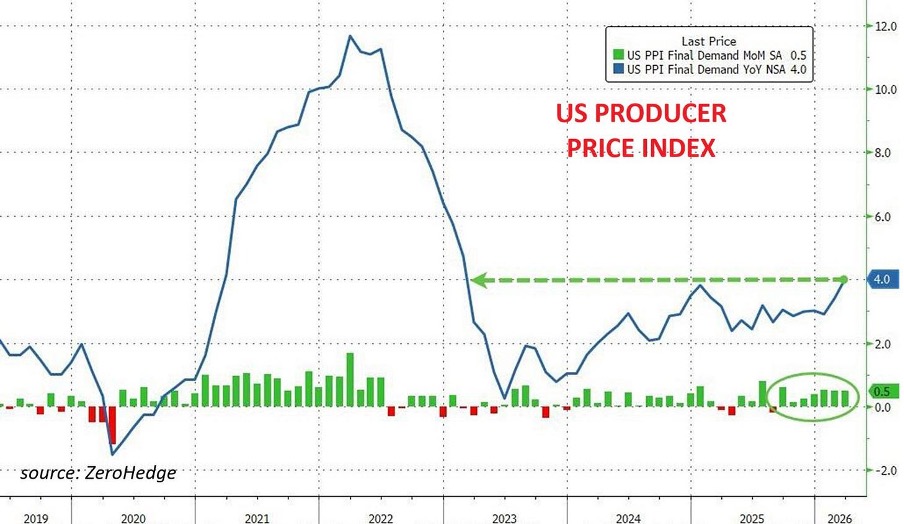
First, these figures actually fell short of market expectations. The consensus forecast had predicted a monthly increase of +1.1%, more than double the reported figure. Year-over-year, prices rose by +4.0%, an increase, but well below the expected +4.6%. Even more telling, core inflation (excluding food and energy) rose by only +0.1% over the month, compared to the anticipated +0.4%, bringing the annual rate down to +3.8%. In other words, the feared inflationary shock — particularly linked to geopolitical tensions and energy — has not yet fully materialized in the aggregate data.
But this apparent “positive surprise” is actually misleading. As in previous reports, the trend remains extremely concentrated. Final goods rose by 1.6%, while services remained unchanged. Excluding energy, the increase was marginal. The core of the trend clearly remains energy-driven, with a monthly increase of +8.5%, driven by sharp rises in diesel (+42%), distillates (+39%), and kerosene (+30.7%).
This gap between expectations and reality can be partly explained by timing. The market had anticipated an immediate impact from the energy shock linked to the conflict in Iran. In reality, the ripple effect appears to be slower and more fragmented, and depends largely on companies’ ability to pass on these costs. And this is precisely where the situation becomes concerning: that ability already seems limited.
Services are stagnating, intermediate demand is declining (-0.1%), certain segments are contracting (-0.4% at the intermediate level), and private investment is losing momentum (-0.3%). At the same time, several leading indicators of demand show a clear deterioration: freight is down by 10.1%, food distribution is down by 6%, commercial rents are down by 3.3%, and business loans remain down by more than 20% year-over-year. In other words, the real economy lacks the capacity to absorb a prolonged cost shock.
Another factor further complicates the picture: inflation expectations are rising sharply.
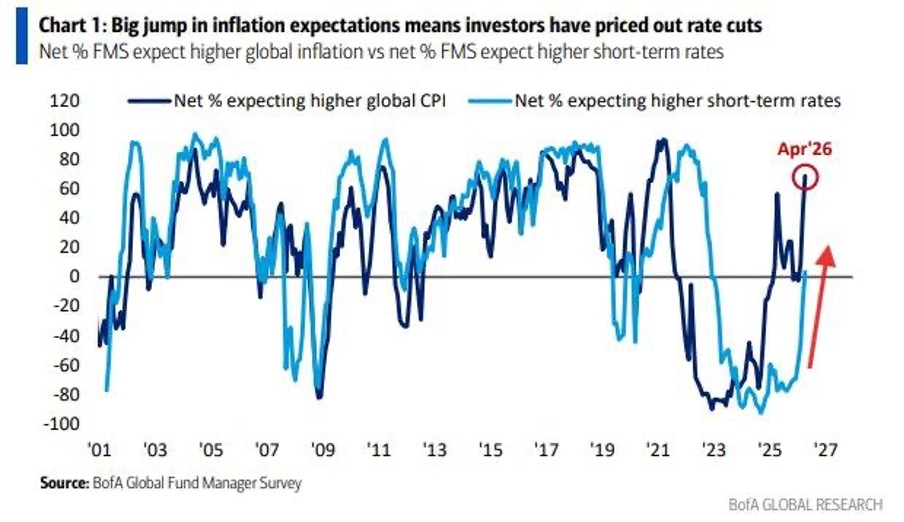
Investors are beginning to factor in a sustained inflationary environment, which is already pushing back expectations of rate cuts. But these expectations are not neutral. When they take hold, they change behavior: economic agents accelerate their purchases, fearing they will pay more tomorrow. This dynamic, linked to the marginal propensity to consume (MPC), creates a form of self-reinforcing inflation in the short term.
And yet, despite this context, the market continues to favor an accommodative scenario, still anticipating a rate cut before any hike. This positioning reflects a very specific interpretation of the data: that of an inflationary shock perceived as transitory, in an economy deemed fragile enough to warrant monetary support.
It is precisely this disconnect that makes the situation unstable. On one hand, a real and profound energy shock that continues to spread. On the other, aggregate inflation that remains contained and a monetary policy anticipated to be accommodative. In between, a real economy that is already showing tangible signs of running out of steam.
The conclusion is gradually becoming clear: we are likely not facing a mere bout of inflation, but a possible return to a stagflationary environment, where rising costs coexist with slowing growth. In this type of environment, traditional financial assets tend to be caught between squeezed margins and high valuations, while certain asset classes regain their role as safe havens. Historically, gold performs particularly well during these phases, precisely because it captures both the loss of monetary purchasing power and the rise in systemic risk.
The recent rise in the price of gold is fully in line with this dynamic.
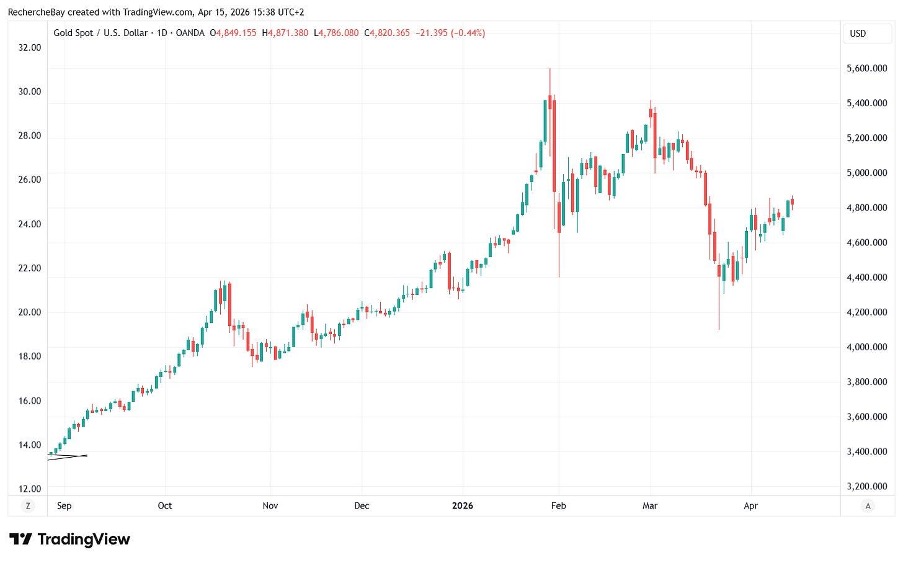
This trend reflects not merely a technical adjustment or tactical repositioning, but a gradual reallocation in response to a shift in the macroeconomic landscape. In a stagflationary environment, gold captures both the erosion of monetary purchasing power and the rise in systemic risk. In other words, gold’s recent trajectory increasingly appears to be a direct reflection of this shift toward a regime where inflation and economic slowdown coexist — a scenario in which it has historically always outperformed.
Reproduction, in whole or in part, is authorized as long as it includes all the text hyperlinks and a link back to the original source.
The information contained in this article is for information purposes only and does not constitute investment advice or a recommendation to buy or sell.


